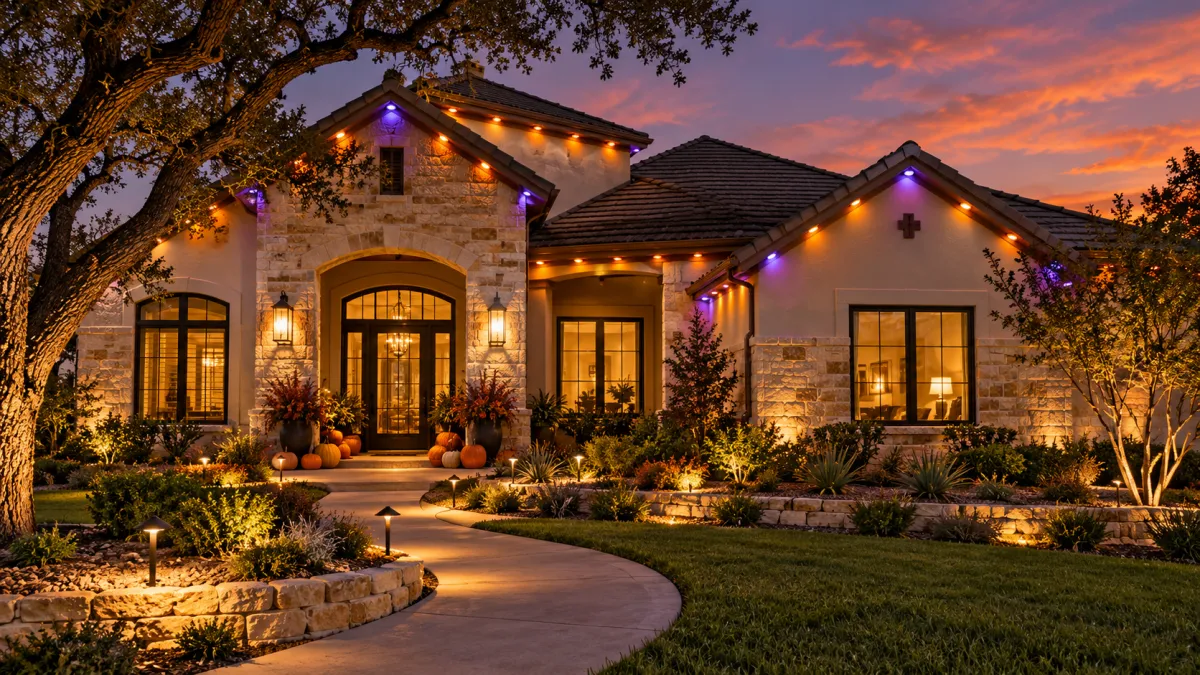
Halloween Roofline Lighting: A Polished Plan for San Antonio Homes
A Halloween lighting scene can be festive without turning the whole house into a flashing display. For a San Antonio home with permanent roofline lighting, the strongest plan usually starts with a small color palette, a clear path to the door, and a sensible shutoff time.
Infinity Outdoor Lighting designs outdoor lighting around homes and businesses. If you are exploring a permanent system this October, use the holiday as a chance to define the everyday layout too. Color choices are easy to revisit; the placement, power, and control plan deserve careful thought from the start.
Pick a main color and a supporting color
Amber and violet can create a Halloween mood, but you do not need both at equal brightness across every surface. Try one as the main roofline color and use the other sparingly around an architectural detail. A restrained scene often reads more clearly from the street than many competing colors.
Look at the house’s materials before choosing. Warm stone can work well with an amber accent. Pale walls may reflect stronger color than expected. Darker finishes may need a different arrangement to show shape without making individual light points glaringly bright.
Keep the front door easy to recognize. A small area of warm white near the entry can help visitors read house numbers and see door hardware. That practical light should remain useful even when the roofline changes color.
Separate the display from the walking route
Decorative roofline lighting and pathway lighting have different jobs. A colorful roof edge may make the home easy to spot, but it does not necessarily reveal a step, a sloping walkway, or a change in paving. Walk the route from the sidewalk to the door after dark and look for shadows and glare.
Keep temporary decorations, extension cords, and props away from the walking route. Avoid arranging a bright fixture so that guests must look directly into it as they approach. If the property needs dedicated path or step lighting, include that in the design discussion instead of assuming the roofline will cover it.
Where permanent lighting supports separate zones, consider keeping the entry and walking route on a steady useful setting while the decorative areas run a seasonal scene. Confirm the behavior with the selected controller and fixtures before planning around it.
Use motion sparingly
A still scene can look polished and be easier for neighbors and visitors to live with. If you enjoy animation, choose a slow effect and preview it from several viewpoints. Fast flashing can be distracting and uncomfortable for some people. A scene that looks appealing on a small phone screen can feel very different at the scale of a house.
Test any effect from the street without standing in traffic, from the porch, and from a nearby indoor room. Look for sharp changes that draw attention to the light source rather than the building. Lower brightness before adding more fixtures or more colors.
Build an October schedule you can explain
Decide when the seasonal scene should start and end. Then decide what should happen afterward: return to a quiet everyday scene, retain only essential entry lighting, or turn decorative lighting off. Review the schedule before Halloween rather than discovering an unexpected all-night display later.
Some smart lighting systems support recurring holiday schedules, scenes, and zones. Haven Lighting describes these app functions in its system guide. Exact features and connectivity requirements depend on the products installed, so ask Infinity to confirm the proposed configuration and demonstrate the controls you plan to use.
Write down the household’s preferred settings. A simple note such as “seasonal front roofline during evening hours; entry steady; decorations off overnight” makes a useful starting point. The installer can help translate it into supported controls.
Plan for the neighbors and any property rules
View the design from your property line and consider nearby bedrooms. Direct light onto the intended surface, keep brightness comfortable, and limit the hours of decorative operation. Those choices support a display that feels considered rather than intrusive.
Check any applicable HOA requirements before installation or a major display change. Product descriptions such as “discreet” do not establish permission. Rules may address visible equipment, colors, mounting, or operating hours. Keep the approved design and any written conditions with the project paperwork.
Responsible outdoor-lighting principles from DarkSky and the Illuminating Engineering Society are also useful: give light a purpose, keep it directed, and use controls to avoid unnecessary illumination. Decorative color is best treated as a limited scene within the broader plan.
Make November part of the design
Before choosing a system for Halloween, ask to see how it handles a normal warm-white evening. Then consider a Thanksgiving gathering or a winter holiday palette. A permanent installation should support the ways you want to use the property throughout the year, with a clear approach to maintenance and adjustments.
For the consultation, gather daylight exterior photos, your preferred colors, the roof sections you want to highlight, and any entry or path concerns. Ask for a written scope covering the installation, controls, training, and service terms. Timing and availability should be confirmed for your project; a calendar date alone is not a promise of completion.
Request a design quote from Infinity Outdoor Lighting for your San Antonio-area property. A good October display starts with a lighting plan you will still enjoy in the months ahead.
Image: Illustrative lighting design concept; not a completed customer project.
