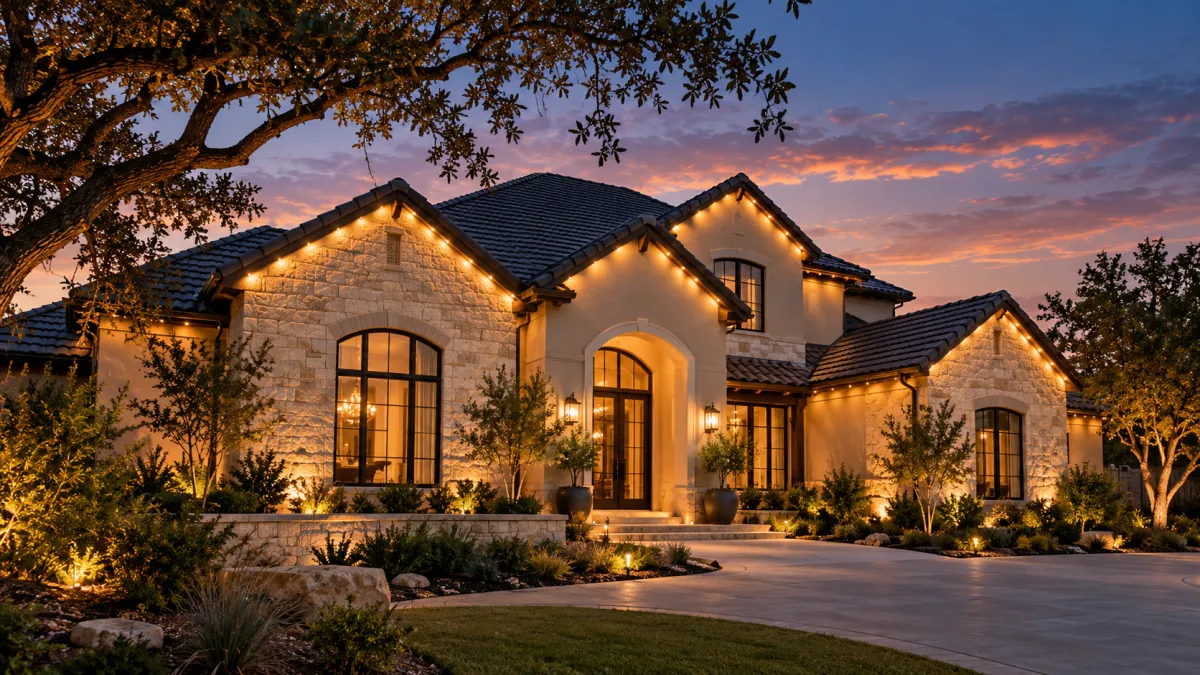
Permanent Roofline Lighting That Respects Your Home's Architecture
A roofline is more than a place to attach lights. It tells you how a house is organized: where the entrance sits, which roof plane leads the composition, and how additions connect to the original structure. Permanent lighting looks more intentional when it follows those relationships instead of treating every available edge as equally important.
For a San Antonio home, start with the architecture you already enjoy in daylight. An arched porch, a generous horizontal eave, or a simple stone entry may provide a stronger starting point than the tallest or longest section of roof. The goal is a nighttime composition that still feels like your home.
Find the main idea before choosing colors
Stand where someone normally sees the property, such as the public sidewalk or the approach to the driveway. Stay clear of traffic. Identify the first feature you want a visitor to notice, then choose one or two supporting features. This creates a useful order for the design conversation.
On a house with a prominent porch, the entry can lead while the roofline quietly frames it. On a modern home with a strong horizontal silhouette, a restrained line of light may be the main architectural gesture. A more detailed elevation may benefit from selective accents rather than a complete outline of every intersection.
Take a daylight photograph and mark these priorities. Use different notes for “important,” “optional,” and “leave quiet.” That simple exercise can prevent a proposal from becoming a list of illuminated feet with no clear design purpose.
Read the roofline as connected shapes
Look at where one roof segment ends and another begins. A visible break may be appropriate if it coincides with a change in building form. An unexplained gap in the middle of a prominent edge can look accidental. Corners, returns, and transitions should therefore be discussed as part of the design, not left until installation day.
The front elevation also connects to the sides. Ask whether a short return is needed to make a corner feel complete from the driveway. You may not need the same treatment around the entire house. The right stopping point depends on the actual views and the surfaces available for mounting.
Keep proposed future work in mind. A planned patio cover or roof repair may change the composition. Tell the designer about those plans before the layout is finalized so the lighting can be considered alongside the building work.
Let materials influence the result
Stone, stucco, brick, and painted trim do not show light in the same way. Rough stone creates small shadows that reveal texture. A smooth pale wall may make a color appear more prominent. Dark trim can make individual light points stand out even when the surrounding surface remains subdued.
Review samples against the actual facade whenever practical. A favorite warm-white setting on one house may look different on another. If you are repainting, share the intended finish rather than asking the designer to optimize a surface that will soon change.
Daylight appearance deserves equal attention. Discuss channel placement, visible equipment, and how corners will be handled. “Discreet” is a design goal that should be checked from the ground; it does not mean that every component will disappear from every angle.
Give the entry its own role
Architectural accents help people recognize the house, but visitors still need to locate the door and understand the approach. Keep useful entry lighting in the plan even when a roofline scene changes for a holiday. House numbers, steps, and door hardware may need different light than a decorative eave.
Imagine a visitor arriving while the main roofline is deep blue or red. Can they see the final step and identify the correct door? If not, the design needs a practical layer. Increasing the brightness of the entire roofline may not address that specific problem.
Review a quiet scene before a festive one
Ask to review an everyday scene first. A modest warm-white arrangement reveals whether the composition works without a dramatic color effect. Once the placement feels balanced, consider which sections should participate in seasonal scenes and which should remain steady.
Check the view from indoors as well. A beautifully outlined eave may still feel distracting through a bedroom window or produce an unwelcome reflection in glass. Include neighboring windows and property boundaries in the evening review, and verify any applicable HOA requirements before installation.
Bring a clear brief to the design visit
A useful brief includes your marked photograph, the features you want emphasized, the places you use after dark, and a realistic description of holiday use. Ask the proposal to explain the layout and its stopping points, not simply identify a product.
Contact Infinity Outdoor Lighting to discuss a permanent lighting design for your San Antonio-area home. A thoughtful plan begins with the building’s character and gives each illuminated element a reason to be there.
Image: Illustrative lighting design concept; not a completed customer project.
